The back story
Kapruka: the coconut, Sri Lanka’s tree of life
The wish-granting palm: what Sri Lanka cooks, drinks, builds, sweeps and prays with, from one tree.

Photo Credit
Image courtesy of © Yumeshan Lakshitha · CC BY-SA 4.0 via Wikimedia Commons
Photo Credit
Image courtesy of © Raveendran Mathusha · CC BY-SA 4.0 via Wikimedia Commons
Photo Credit
Image courtesy of © Curved.kiwix · CC BY-SA 4.0 via Wikimedia Commons1 / 3
In Sri Lanka the coconut palm is Kapruka, the wish-granting tree of legend, and the island takes the name seriously: it cooks with the nut, drinks the water and the sap, builds with the trunk, sweeps with the leaves, prays with the oil and exports the husk to the world. This is the story of the tree that gives everything.
Somewhere in Sri Lanka, right now, someone is grating a coconut. Someone else is drinking one through a straw at the roadside, someone is walking a rope forty feet up between two palms, someone is sweeping a yard with a broom made from its leaves, and someone is lighting a brass lamp with its oil to bless a wedding. The island has a name for a tree that does all this: Kapruka, the tree that grants every wish.
The wish-granting tree
In the old stories of South Asia, the kalpavriksha is a heavenly tree that gives whatever is asked of it. Sinhala speakers call it kapruka, and long ago they gave the name to the coconut palm, which is about as close to the legend as botany has managed. It feeds, shelters, lights and clothes a household, and asks in return only sun, rain and a little patience.
The palm grows all round the coast, leaning over every beach as if to see who is coming, but its heartland is inland: the Coconut Triangle of Kurunegala, Puttalam and Gampaha, north of Colombo, where estates of tall palms run to the horizon in neat rows with cattle grazing beneath them. Coconut planting spread across these districts in the colonial centuries, alongside the village gardens that had always grown it.
The island takes the tree seriously enough to have studied it for almost a century. The Coconut Research Institute was founded in 1929 at Bandirippuwa Estate, Lunuwila, in the heart of the Triangle, and its scientists still breed the palms, fight their pests and count their nuts. Sri Lanka grows coconuts by the billion, and most of them never leave the island: they are eaten at home, one grated bowlful at a time.
The kitchen
A Sri Lankan day rarely passes without coconut, and most of it begins with the scrape of a hiramanaya, the grater with a serrated metal head, against the white flesh of a split nut. Freshly grated, it becomes pol sambol, red with chilli and sharp with lime and red onion, the relish that makes plain rice sing; mallung, shredded greens tossed with coconut in a hot pan; and pol roti, the coconut flatbread of a hurried breakfast.
Squeeze the grated flesh with water and it gives coconut milk, thin from the second pressing and thick and rich from the first. That milk is the velvet in a Sri Lankan curry and the gloss on a pot of parippu, the everyday lentils.
Cook rice in it and you have kiribath, the milk rice served in neat diamonds at every celebration; set it with jaggery, eggs and spices and you have watalappan, the custard the Malay community brought to the island’s tables.
Dry the flesh and it becomes copra, which is pressed for the cooking oil in which half the island’s food is fried. Pressed cold from fresh flesh, it gives virgin coconut oil, which the rest of the world has lately discovered and Sri Lanka has been quietly using all along.

Photo Credit
Image courtesy of © Ankur P from Pune, India · CC BY 2.0 via Wikimedia Commons
Photo Credit
Image courtesy of © AntanO · CC BY-SA 4.0 via Wikimedia Commons
Photo Credit
Image courtesy of © Weldon Kennedy from London, UK · CC BY 2.0 via Wikimedia Commons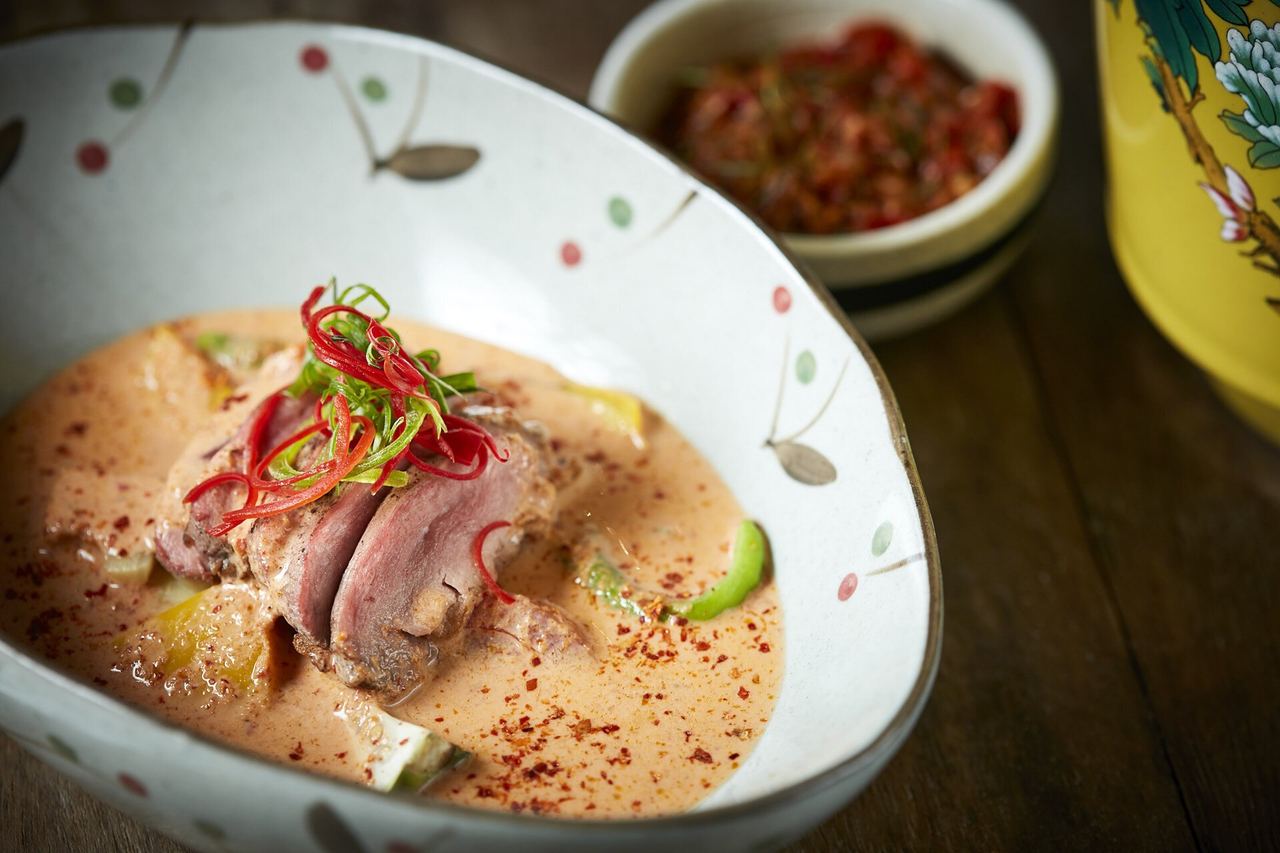
Photo Credit
Image courtesy of © Monsoon Colombo1 / 4
King coconut
The island’s own coconut is the thambili, the king coconut, a variety with a shell of startling orange that hangs in bunches from roadside stalls everywhere. It is grown for its water, which is sweet, faintly salty and gloriously cold when the vendor keeps the nuts in the shade.
He lops the top off with three strokes of a knife, pushes in a straw and hands it over; when you have drunk it, he splits it so you can scoop out the soft jelly inside with a sliver of the husk.
Thambili is the island’s favourite thing to drink on a hot day, and on a Sri Lankan road there is almost always a stall within reach. It is also the colour of celebration: at church feasts and village festivals, bunches of king coconuts hang from bamboo gateways like orange lanterns.
The sky walkers
High above the plantations, the toddy tapper goes to work. Ropes are strung between the crowns of neighbouring palms, one to walk on and one to hold, and the tapper crosses from tree to tree high above the ground, carrying a knife and a pot, so that he climbs once and taps a whole row. It is a craft often handed down in families, and to watch it is to understand why tappers are sometimes called the sky walkers.

Photo Credit
Image courtesy of © Singhalawap · CC BY-SA 3.0 via Wikimedia CommonsHe slices the tip of the unopened flower and ties a pot beneath it to catch the sap that drips out. Boiled down slowly, the sap thickens into golden coconut treacle, poured over buffalo curd in the south, or sets into blocks of jaggery. Left to itself, it begins to ferment within hours into toddy, a cloudy, tangy, mildly alcoholic drink sold in village taverns.
In Sri Lanka, nothing on a coconut palm is wasted, except perhaps the shade.
Distil toddy and you have arrack, the island’s own spirit, smooth, amber and the backbone of any Sri Lankan cocktail worth ordering; ferment it further and it turns to coconut vinegar, the sharpness in the island’s pickles. One flower, four products, and a man on a rope to thank for all of them.
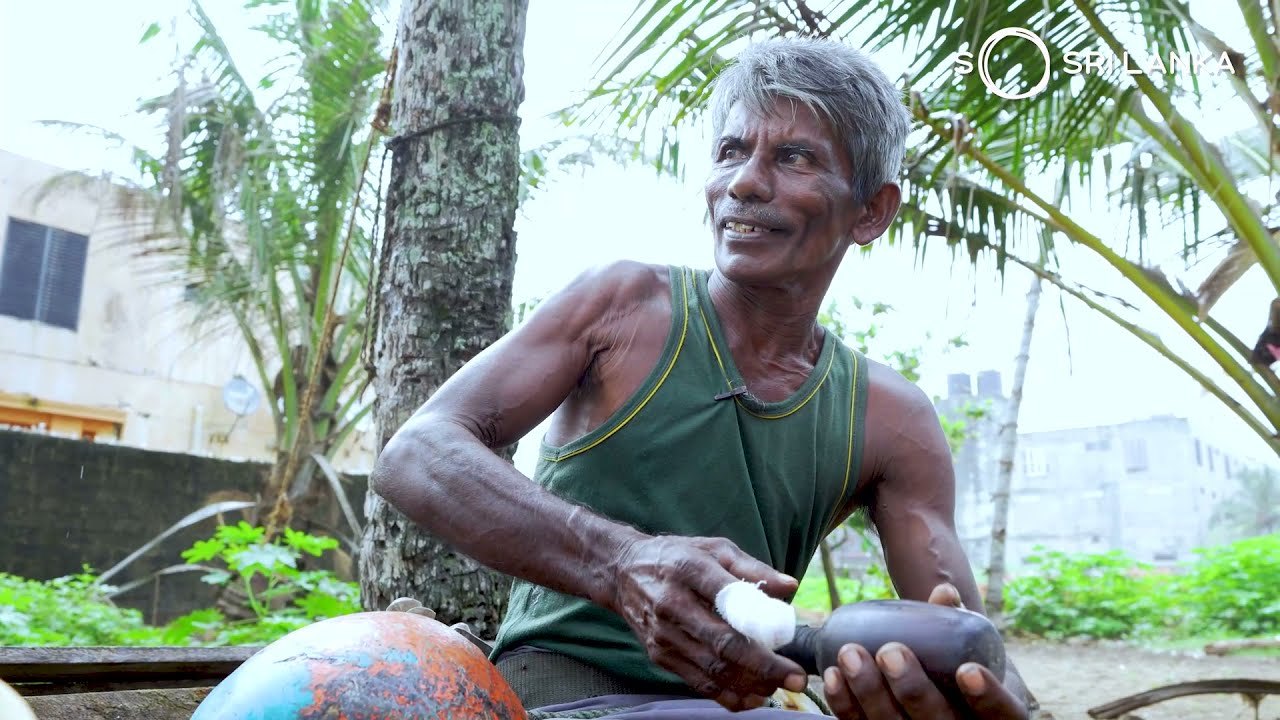
Video Credit
Video © Courtesy of Sri Lanka Tourism · plays from YouTube, which may set its own cookies once it startsIn tradition and Ayurveda
In Ayurveda, and in Sri Lanka’s own indigenous medicine, Deshiya Chikitsa, the coconut palm is classed as cooling and nourishing, and almost every part of it has a traditional use. King coconut water is traditionally given on hot days and used as a base for herbal preparations. Coconut oils, king coconut oil prized among them, carry the herbal infusions used in Ayurvedic massage and in traditional hair and scalp treatments.
Tradition finds a use for the rest of the palm too: preparations of the unopened flower are a customary gift to new mothers, and the roots and shells appear in old village remedies. These are traditions, described here as the island practises them, and not medical advice; for anything that worries you, see a qualified doctor, and for Ayurveda, choose a registered practitioner.
Husk, shell and frond
Nothing on the palm goes to waste, least of all the parts you would throw away. The thick husk around the nut is soaked and beaten until it gives up its fibre, coir, which shrugs off salt water and is spun into rope, woven into doormats and nets that hold riverbanks in place, and bundled into the stiff bristle of brushes.
Sri Lankan coir is shipped around the world, and the dust left over, coco peat, now travels too, pressed into bricks as a growing medium for gardeners.
The hard shell is carved into the pol katu handa, the coconut-shell ladle in every kitchen, and into bowls, buttons and jewellery; charred in kilns, it becomes activated carbon, a filter used around the world to clean water.
The fronds are woven into cadjan, the overlapping mats that roof village houses and beach cabanas and keep them cool, and the stiff midribs of the leaflets are stripped and bound into the ekel broom, the long, whispering besom you will hear sweeping every courtyard in the country at dawn.
When a palm stops bearing, its dense, speckled trunk is cut into rafters, furniture and drums; in the ground, its roots help hold sandy soils together. The tree, it turns out, is useful even when it is retired.

Photo Credit
Image courtesy of © SL Trades and Crafts Documentation Project · CC BY-SA 4.0 via Wikimedia Commons
Photo Credit
Image courtesy of © TheOilLamp · CC BY-SA 4.0 via Wikimedia Commons
Photo Credit
Image courtesy of © Adam Jones · CC BY-SA 2.0 via Wikimedia Commons1 / 3
Lamps, coconuts and the New Year
Because it sustains life so completely, the coconut is woven into the island’s rituals across its faiths. A tall brass oil lamp, filled with coconut oil, is lit to open weddings, ceremonies and new ventures, each guest of honour lighting a wick in turn. At Hindu temples and at Kataragama, devotees smash coconuts on a stone, the shattered shell a symbol of breaking the ego and letting the pure heart out.
At the Sinhala and Tamil New Year, in April, the coconut is everywhere: in the kiribath served as the first meal of the Sinhala New Year, in the sweets on every table and in the games. In pora pol, a traditional New Year contest, players knock coconuts together until one cracks, and the owner of the stronger nut wins; the losers, at least, have the makings of lunch.
Our advice: drink thambili from the roadside every chance you get, ask for pol sambol at breakfast and kiribath at any celebration, and look up when you walk through a coconut grove at dawn: there may be a tapper crossing the sky. Taste toddy once in its own village, buy an ekel broom you will never fit in your luggage, and take home a bottle of arrack instead.
Why it's on our list
- The wish-granting tree
- The kitchen
- King coconut
- The sky walkers
- Husk, shell and frond
- Lamps and the New Year
Location
The map comes from Google Maps, which sets its own cookies once it loads.
More in depth
 The back storySri Lankan CuisineRice and curry, hoppers, kottu and watalappan, and where to taste them.
 The back storyOndaatje, Karunatilaka and the Sigiri graffiti: Sri Lankan literatureTwo Booker winners, a Burgher saga and the oldest poems, on a wall at Sigiriya.
 The back storyDuran Duran in Sri Lanka: the 1982 Rio videosHow Duran Duran shot three famous videos in Sri Lanka in 1982.